One Tuesday evening I went to watch my very good friend Milou doing what he does best, judo. He is a professional judoka, who set up his own club with former trainer and longtime friend Steph, in their home city of Strasbourg. This is such an important part of his life, his work, his passion, his reason for being in Japan, that I had wanted to go and watch for a long time. The perfect opportunity came when Steph was in Kyoto visiting, as he could explain to me some of the moves and the structure of the classes, which, he noted, were very different to judo classes in France. The wooden dojo itself has an interesting history, opened in 1946 in the grounds of the Yamazaki family home, at a time when post-WWII occupying forces had banned judo and certain other martial arts. Sometimes allied personnel themselves would attend these secret dojos, and once it was realised that judo did not encourage militarism, judo was legalised once more. The dojo is currently managed by Yamazaki sensei who took over from her father and who despite her petite, slim, very friendly appearance holds one of the highest ranks in judo, 7th dan black belt. すごいでしょう!
Sunday, 12 May 2013
Milou's Judo
One Tuesday evening I went to watch my very good friend Milou doing what he does best, judo. He is a professional judoka, who set up his own club with former trainer and longtime friend Steph, in their home city of Strasbourg. This is such an important part of his life, his work, his passion, his reason for being in Japan, that I had wanted to go and watch for a long time. The perfect opportunity came when Steph was in Kyoto visiting, as he could explain to me some of the moves and the structure of the classes, which, he noted, were very different to judo classes in France. The wooden dojo itself has an interesting history, opened in 1946 in the grounds of the Yamazaki family home, at a time when post-WWII occupying forces had banned judo and certain other martial arts. Sometimes allied personnel themselves would attend these secret dojos, and once it was realised that judo did not encourage militarism, judo was legalised once more. The dojo is currently managed by Yamazaki sensei who took over from her father and who despite her petite, slim, very friendly appearance holds one of the highest ranks in judo, 7th dan black belt. すごいでしょう!
Thursday, 2 May 2013
One Planet People and Shojin Cuisine
![]() |
| Chef Tanahashi in the OPP kitchen |
I was keen to attend OPP's latest event, a really unique opportunity to cook with one of the masters of shojin buddhist cuisine, Tanahashi Toshio, a chef who is widely celebrated in Japan. At the heart of shojin cuisine are plants, and their conception as a gift from nature that has sustained humans for thousands of years, in a way that is the most satisfying and nourishing to our cells. Meat and fish, considered unable to provide the same nourishment, are rejected in favour of bringing out the best in seasonal vegetables and humble grains.
When cooking with Tanahashi-san, we used no animal products, just tofu, vegetables, rice and fruit. The results were (admittedly a little surprisingly) delicious! Rice with freshly shelled peas, a salad of white radish, yam, carrot, orange and strawberries, and a stir-fry of tofu, greens and mushrooms. I had not eaten so healthily in a long time; I felt good about what I was putting inside my body, in the knowledge that I had helped to prepare it and that there were no additives or preservatives in this meal. We were also lucky to savour the sesame tofu that Tanahashi-san labours to produce every day in his shop 'Sankyo' on Gokomachi street. The evening has inspired me to make the effort more often to cook from scratch, and eat more healthy vegetables and grains. My first shojin resolution: Monday will be make my own bento day!
For a deeper understanding of shojin ryori and what it means to Tanahashi-san, this interview that he gave to the wonderful Kyoto Journal (where I've just started interning), is particularly insightful:
http://kyotojournal.org/creative-kyoto/the-art-of-tanahashi-toshio
![]() |
| photographs: OPP |
Wednesday, 24 April 2013
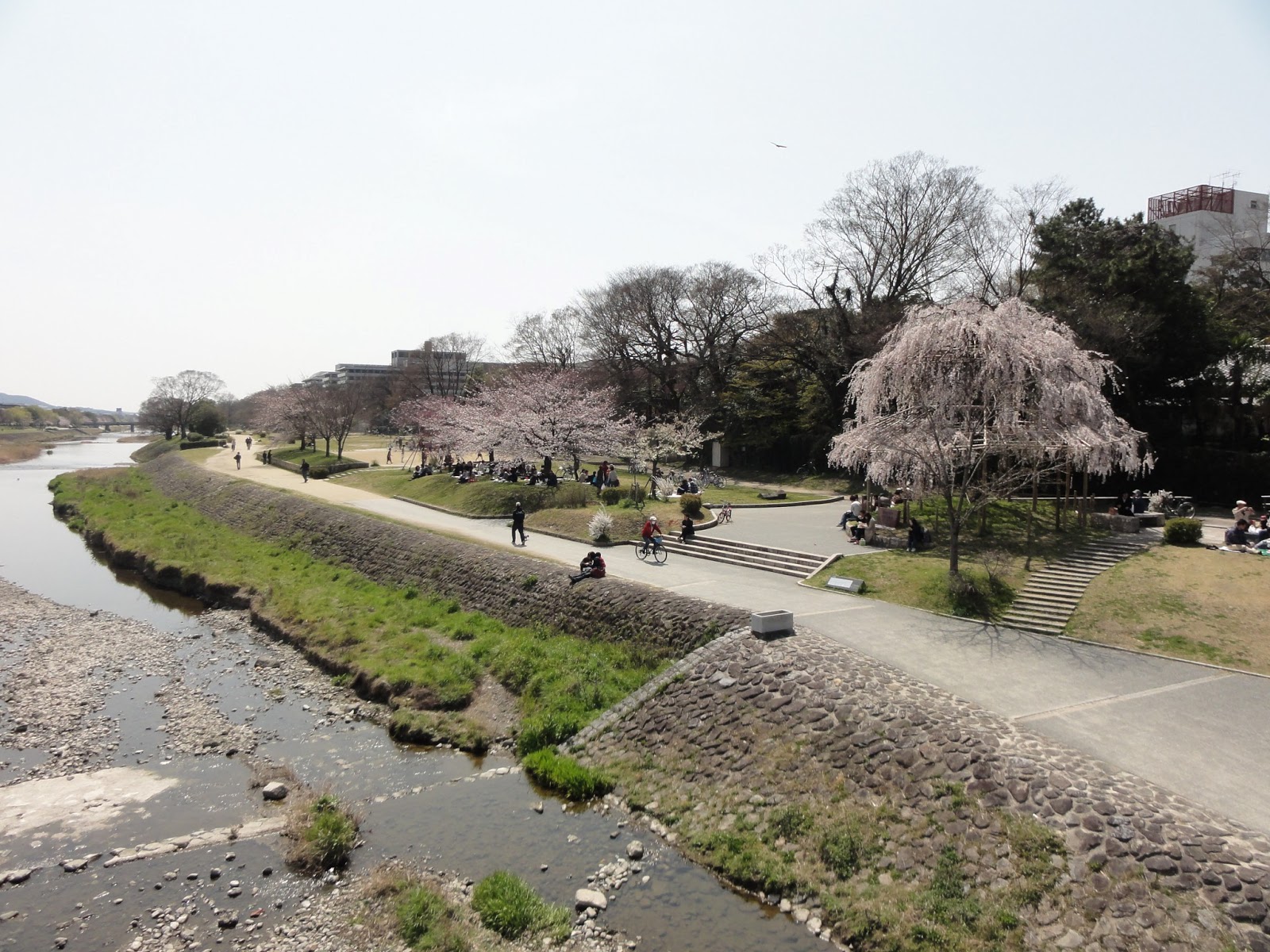
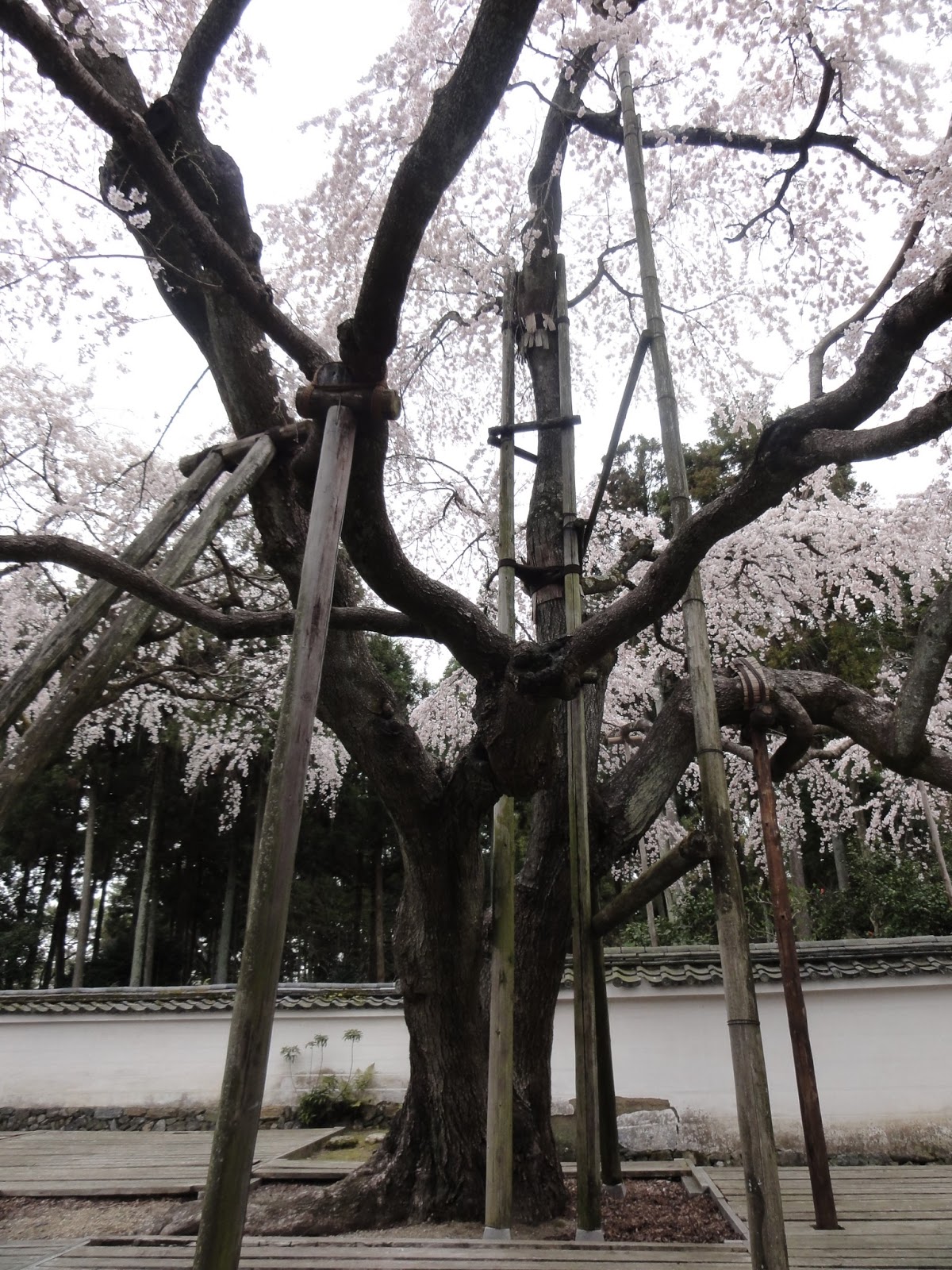
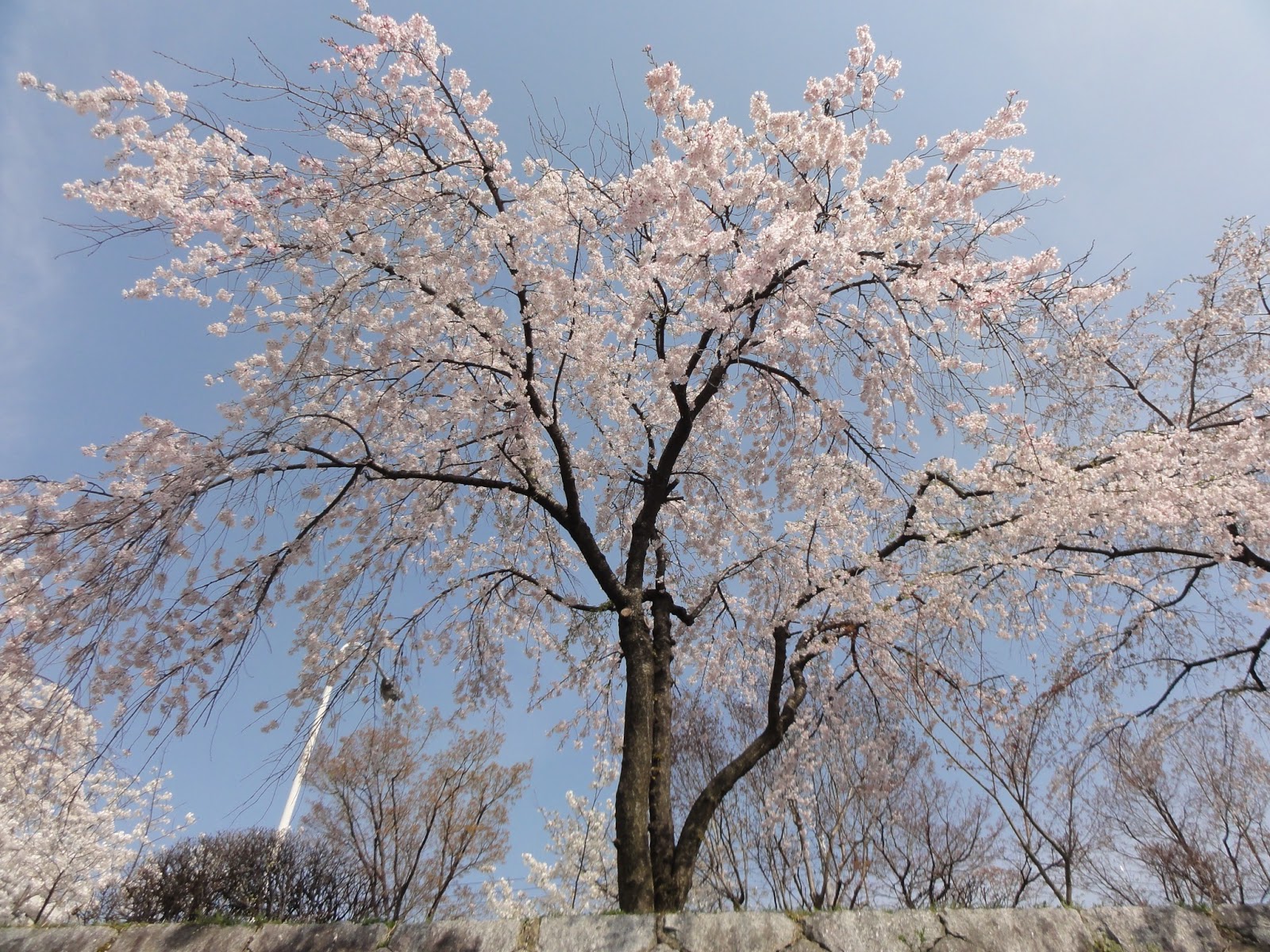
Kyoto in bloom
| The Philosopher's Path |
| The Imperial Palace park |
| Sanjusangendo temple garden |
| The Kamo river |
| Very old cherry tree needing a lot a support, Daigo-ji (temple) |
| Daigo-ji |
| Nijo castle night-time illumination |
| Cherry trees on the bank of the river at Gojo |
| Kiyamchi street at night |
My advice to make the most of this natural phenomena:
- 1. Regularly check online reports of the sakura hot-spots with updates of the percentage blooms of trees to let you know when they reach full bloom. The blooming times for different types of trees and trees in different areas varies.
- 2. Visit the most popular spots as early as possible in the morning – ideally before 9:30am. Soon afterwards hordes of tourists may arrive on buses and ruin the peaceful atmosphere!
- 3. Watch the weather forecast and make the most of sunny days – a rainy day and strong winds can cause many blossoms to fall.
The Japan guide offered regular reports on the progress of blossoms in Kyoto:
For beautiful sakura photos from all over Japan, inspiration for 2014:
Sunday, 21 April 2013
Kyoto cooking circle
![]() |
| photograph: Kyoto Cooking Circle |
Today I attended the Kyoto Cooking Circle's monthly cooking class, in the gleaming kitchen of the Wings Kyoto building. It was absolutely fantastic, from the professionalism of the all-volunteer staff to the delicious food and warm, chatty company. The class is held once a month, with a new menu each time. For Japanese participants the class costs 2000 yen, for the foreigners whose participation they actively encourage the cost is 1000yen. We made an onion salad, easy miso soup and tri-coloured chicken, egg and snow pea rice 'donburi', which was delicious and I will be definitely trying this out at home. For dessert, uguisu-mochi; a traditional Japanese sweet made essentially from rice flour and red bean paste, that requires deft handling of burning hot sticky rice paste, but is actually not as complicated as I thought to make. I'll definitely be trying this out for my wagashi-loving mum! Everyone receives the recipes in Japanese and English to take home with them.
There's a limit to how many people can participate and the classes always seem to book up, so to reserve a place head to their website:
http://kcc.fc2web.com/e_main.htm
Tuesday, 2 April 2013
Plum blossom festival, Kitano Tenmangu shrine, 25th February
Geiko and maiko served bowls of thick green matcha during a special tea ceremony among the blossoming plum trees of the shrine. It was an utterly enchanting experience, before I had only ever glimpsed them scurrying down the narrow streets of Gion between evening appointments. On this day we were able to appreciate their beautiful kimono, the artistry of their make-up, from inches away and even talk to them. This hardly diminished their mystery however, I find them even more fascinating now that I felt the presence of the real women and young girls who choose to enter such an intriguing profession, surely one of the most little known in the world. The graciously smiling Maiko were wearing longer obis and more brightly patterned hair ornaments and kimono, while the senior Geiko appeared in more sombre-toned dress, with short obis and a simpler hair dress; their dignified poise was commanding enough. Seeing them made me wonder, why is their ideal of beauty to be painted so white, their lips, eyebrows, corners of their eyes drawn a startling bright red? Who are the men they entertain?
The plum blossoms, just starting to bloom, seemed soft and delicate. There is something very special about celebrating nature with a festival like this; the simple beauty of the blossoms, the new spring life they symbolise, things which can be appreciated by everyone, all ages and cultures. Now I’m waiting impatiently for the first cherry blossoms to appear!
Subscribe to:
Posts (Atom)